Open spaces

Open spaces

Friday, 28 March 2014

Moggs Country Cookhouse

Moggs has been in operation (and incredibly popular) for 20 years and after arriving the other day, for the first time, it didn't take me long to work out why.  It's a friendly, family run restaurant in the picturesque Hemel-en-Aarde Valley (near Hermanus) in South Africa's Western Cape.  There is a beautiful and relaxed country setting and with a wine list that showcases the valley's talent, wonderful local produce and a talented kitchen, any meal here will be memorable (for all the right reasons).

Lamb shank of note!

The team at Moggs have given me a sweet recipe. because I'm so sweet?


Lemon curd and yoghurt pots with brulee topping, Van Der Hum syrup and fresh berries

Ingredients: (serves 4)
  1. 150g lemon curd
  2. 500ml Greek yoghurt
  3. 1 egg yolk (beaten)
  4. zest of half a lemon
  5. 400g fresh berries for topping
  6. a sprinkling of Demerara sugar
Van Der Hum syrup:
  1. half an orange, juice and rind
  2. 2 Tbsp lemon juice
  3. 120ml sugar
  4. half tsp corn flour
  5. 60ml Van Der Hum
Method:

Lemon curd brulee:
  • mix all the ingredients together except the berries
  • place in individual ramekins (4) and immerse half way in water in a tray, then cover with foil (to prevent curdling)
  • bake for 25mins at 180 C
  • the mix should have a slight wobble and will thicken a bit when cooled
  • sprinkle with Demerara sugar and blow torch or pop under the grill to get your crisp topping
Van Der Hum syrup:
  • add the juice, rind and sugar to a saucepan (over a medium heat) and stir until melted
  • mix corn flour with a bit of water to a smooth consistency, then add to sauce to thicken
  • cook for 2mins, stirring to avoid lumps
  • take off the heat and stir in the Van Der Hum
Sprinkle fresh berries and Van Der Hum syrup over each brulee.
 

Pierre and his Giant Periwinkle

 
The boutique winery of Giant Periwinkle, in Bredasdorp, is making a Fume Blanc, a Sauvignon Blanc, a Pinot Noir and a Syrah. Sadly their impressive Malbec is a thing of the past. I popped in a few weeks ago (at the cellar at Zoetendal) and was lucky enough to meet Pierre Rabie and to taste the reds out of a few Romanian and French barrels. There was a really interesting barrel variation (even with the same grapes and same french oak barrels) and the Syrah was amazingly accessible with great fruit, zingy white pepper and a hint of saltiness. A great example of the cool climate Syrah's this part of the world is capable of. 


Elim - The Beautiful South

Not far from Africa's southernmost point at Cape Agulhas, is the Elim Wine Ward.  An environment that can truly be said to be suited to 'cool climate' wines with frequent sea 'breezes' chilling the vines.  By planting the right thing, in the right soil, with the correct sun and wind exposure, and most importantly not fiddling too much in the cellar, most of the winemakers of this part of South Africa have brought out the absolute best in their grapes.  The slow ripening of the fruit, due to the cool and relatively harsh conditions (and also soils that make the vines work to survive) allow for greater complexity and body in the wines.  This, in my opinion, is best expressed in their Sauvignon Blancs, with flinty minerality, great fruit and a natural acidity. 

The 2013 Strandveld Sauvignon Blanc, taken entirely from the Pofadderbos vineyard, is a wine that captures the uniqueness of the terroir perfectly.  Besides puffadders, the vineyard also has ferricrete soils and this plays a big part in creating the intense complexity, concentration and balance of powerful minerality and lively tropical fruit.  Their Adamastor is a very well constructed (Bordeaux) blend of Sauvignon and Semillon from South Africa's southernmost vineyards.  It's a fairly intense wine that requires a bit of concentration and is great with food.  

Strandveld's very talented winemaker, Conrad Vlok, is a great example of the young force that is taking South Africa's wine image to new heights.  His obvious passion for the industry is evident in all of his wines and even though his awards and medals could fill his cellar, he is about as down to earth as you get.

He's been incredibly busy in his vineyards of late but has still found time to give me a recipe that he feels works well with the Adamastor. 


Conrad's fresh Cob (normally caught off his kayak) with Sycadelic Sauce

Ingredients:
  1. some fresh cob, filleted with the skin left on
  2. a little flour
  3. a handful of fresh coriander
  4. a wedge of butter
  5. half a lemon
Sycadelic Sauce:
  1. 2 Tbsp canola oil
  2. a handful of crushed cashew nuts
  3. 1 chopped red chilli, seeds removed
  4. 2 cloves fresh crushed garlic
  5. 100ml lemon juice
  6. 2 Tbsp fish sauce
  7. 3 Tsbp apricot jam
Method:
  • cut the fish into portions, dust with flour and set aside
  • heat the oil in a small pot and fry the cashews, chilli and garlic for a few mins
  • add the lemon juice and simmer for 2 mins
  • add the fish sauce and simmer for another 2 mins, then stir in the apricot jam
  • cook slowly to glaze
  • taste the sauce, it should be a good sweet/sour combination (adjust if needed)
  • fry the fish portions in a pan with a little oil, meat side first until golden
  • turn the heat down and turn the fish skin side down
  • as the skin starts to turn brown add the butter and squeeze in the fresh lemon
  • don't overcook the fish
  • put a good scoop of sauce over the top of each of the fish portions and garnish with some fresh coriander
  • serve from the pan
  • enjoy with some basmati rice, sweet potato and most importantly a chilled bottle of Adamastor
    

Tuesday, 17 December 2013

A few more Old South African Wines


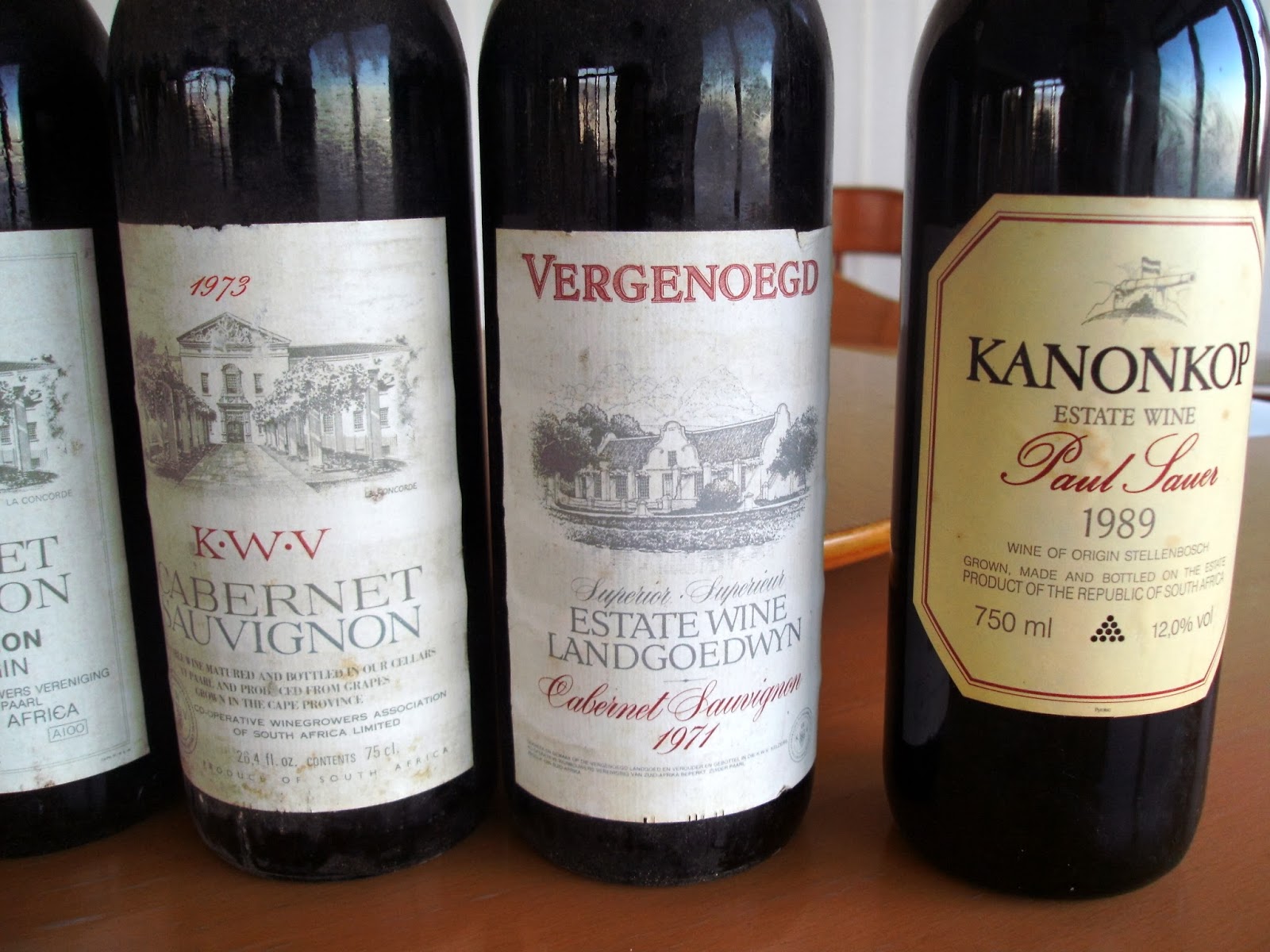
Some more old stuff, all of which had been well cellared and were in relatively good condition.
  1. 1970 (something) KWV Cinsaut
  2. 1980 Landskroon Pinot Noir
  3. 1973 Alto Rouge Estate
  4. 1975 KWV Roodeberg
  5. 1978 KWV Cabernet Sauvignon
  6. 1973 KWV Cabernet Sauvignon
  7. 1971 Vergenoegd Cabernet Sauvignon
  8. 1989 Kanonkop Paul Sauer
I particularly enjoyed the Landskroon, the Kanonkop, the '78 KWV Cab but the stand out on the night for me was the '71 Vergenoegd that was very much alive, with rich blackcurrant and a luscious lingering finish.

The Leopard

The Leopard, a relaxed bistro-style establishment in Melville (Johannesburg), channels it's energy into the exquisite and interesting dishes that leave a surprisingly chilled out kitchen.  It's pretty much exactly what I'm looking for when I go out for a meal.  A menu that is exciting and original, staff that are attentive but not unnecessarily formal and most importantly food that is generous, packed with flavour and well prepared.   

Mozambican piri piri quail stuffed with macadamias and herbs

Mauritian seabass and Saldahna mussels in a chilli, ginger, cream and chardonnay sauce

A beautiful DIY Steak tartare
Taro-leaf masala roll-up that was served with tzatziki, apple-atchar, flatbread and smoked chicken


Andrea Burgener, the talented chef (and co-owner), has the ability of transforming ordinary into exceptional without overcomplicating.  It's all about the food at The Leopard and only the best seasonal and sustainable ingredients are good enough for this kitchen.  Make sure you visit them ASAP. 

Andrea has given us her NOT-GAZPACHO recipe, which she feels is more refreshing than the usual mushed up raw tomato classic.

Not-Gazpacho (serves 8 lucky people)

Ingredients:
  1. 3 cucumbers, peeled and roughly chopped
  2. 4 avocados
  3. 2 green peppers, pips removed
  4. 1 and a half cups spring onion
  5. 4 tsp fresh ginger
  6. 3/4 cup lemon juice
  7. 6 tsp white sugar (or to taste)
  8. 1/2 cup chopped coriander
  9. 4 cups water (or enough to make a thick soup)
  10. 1 flat tsp salt (or to taste)
  11. 1 tsp freshly ground black pepper
  12. toasted sesame seeds
  13. full or double cream yoghurt
Method:
  • blend everything in batches until you have a smooth mix
  • adjust consistency with more water if needed and lastly adjust seasoning
  • unless ingredients are well chilled when blended chill for at least 2 hours  
  • serve some soup in a bowl, topped with a little yoghurt, a sprinkling of sesame seeds and a little black pepper

Sunday, 10 November 2013

Red Thai Curry with roast duck and litchi


Ingredients:
  1. a good glug of vegetable oil
  2. 2 Tbsp red curry paste
  3. 1 tin of coconut milk
  4. 2 duck breasts, skin scored
  5. 1 tin of litchis, drained
  6. 4 small eggplants, chopped into quarters
  7. 2 tsp tamarind paste
  8. 5 lime leaves
  9. a little bit of palm sugar
  10. 2 Tbsp fish sauce
Method:
  • rub a little salt onto duck skin, then place breasts skin side down in a dry pan
  • cook until the skin is golden and crisp, turn and seal the other side for a minute then pop in an oven at 200 C for 5 mins.
  • remove duck and set aside
  • in a pan heat oil then add curry paste and fry for 5 minutes
  • add the coconut milk, turn up the heat to bring to the boil, then allow to simmer for a few minutes
  • add fish sauce, tamarind paste and palm sugar
  • add eggplant and cook until done
  • add lime leaves, litchis and duck and turn heat down and leave for another 5 minutes just to allow everything to come together
  • serve with jasmine rice

Saturday, 26 October 2013

You can teach an old trout new tricks

My trout-skin bowls with fresh avo, grilled haloumi and pine nuts
Sorry, I'm having a bit of a thing with fish skins at the moment.
  • take 1 lightly-smoked trout fillet
  • fry for around 2 minutes, skin-side down in a pan with a little butter
  • pop under the grill after squeezing over a little lemon
  • keep fish warm after removing skin
  • sprinkle with a little salt both sides and pop skin back under the grill to crisp
  • take skin out and mould into a little ramekin
  • a great little side dish to trout and salad or whatever takes your fancy